
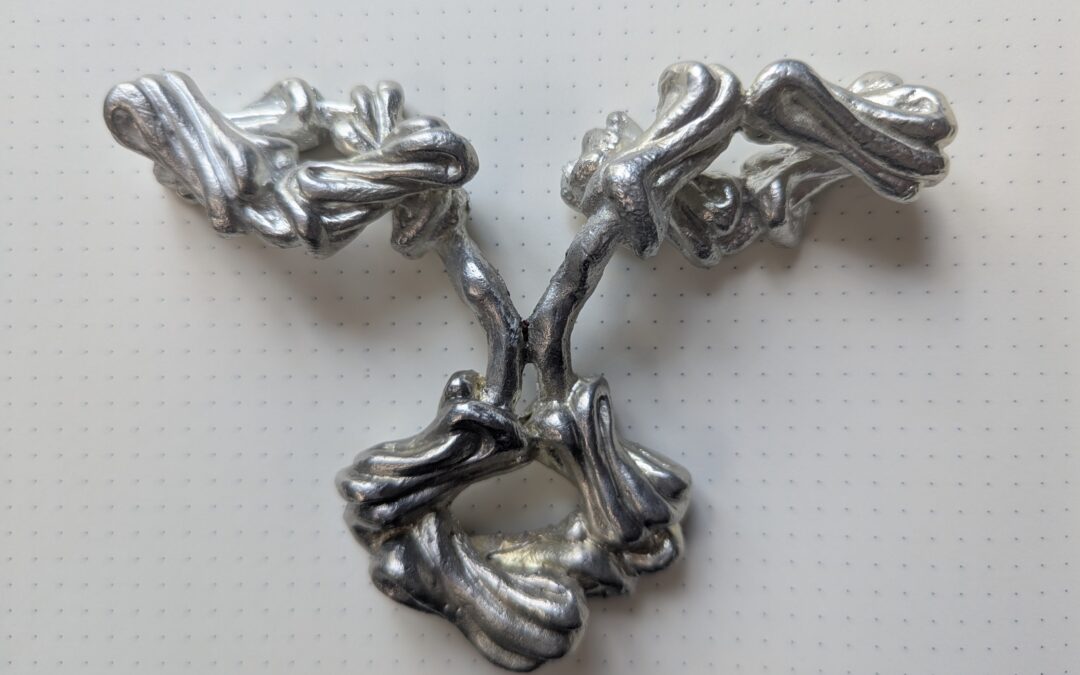
A biochemistry degree from Oxford and six months inside a vaccine research lab led me to a different kind of public art for science. This is the beginning of the story of my virus and antibody sculpture.
Antibodies are small Y-shaped proteins. Most proteins are built to one exact shape, but antibodies are the exception. Each cell that makes antibodies shuffles the DNA that codes for the tips of the antibody (called the variable regions) so the body produces billions of shapes at random. In this way, one of them is likely to lock onto almost anything you might encounter. There is then a sophisticated editing process that eliminates all the cells that make problematic antibodies. You don’t want ones that would target parts of your own body or the foods you eat.
The lab I was in, VCAT, had developed an amazing process for manufacturing antibodies against any new infectious disease that might threaten us.
So I started my research by learning all I could about antibodies. These tiny proteins sit at the heart of the lab’s work and our immune systems.
Here is a little visual diary from the first armature to the finished antibody sculpture on the wall outside the lab:
Initial work on the antibody sculpture
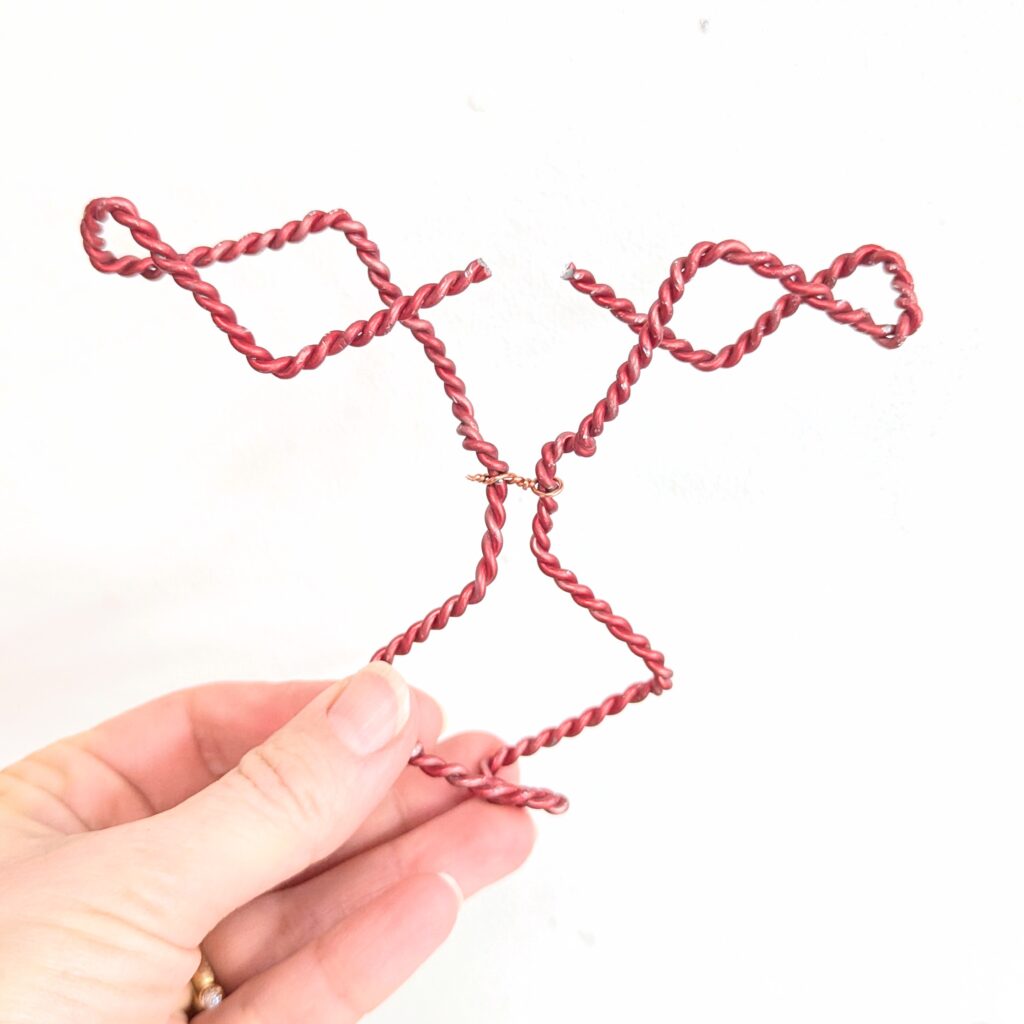
I started making the antibody with an armature made of twisted wire. I twist the wire myself with a hand drill: it makes the wire stiffer and the wax sticks onto it better.
Then I started adding wax to the armature. I use a lovely modelling wax from my foundry (Pangolin Editions). I’ve included a video here so you can see its shape better.
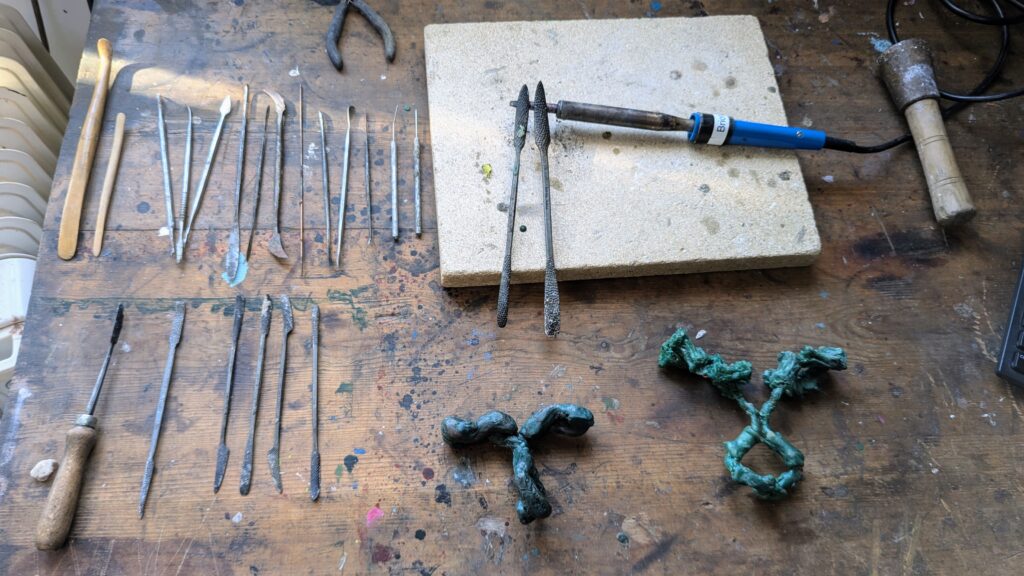
This is my desk whilst working – I use a soldering iron to heat up the metal tools. These are rifflers, more commonly used to carve marble. Milani in Italy makes these rifflers. They make them in a small factory above Pietrasanta in Tuscany, which is where I did a bronze casting residency in 2010. You can also buy these riffles in the UK through Tiranti (Potterycrafts).
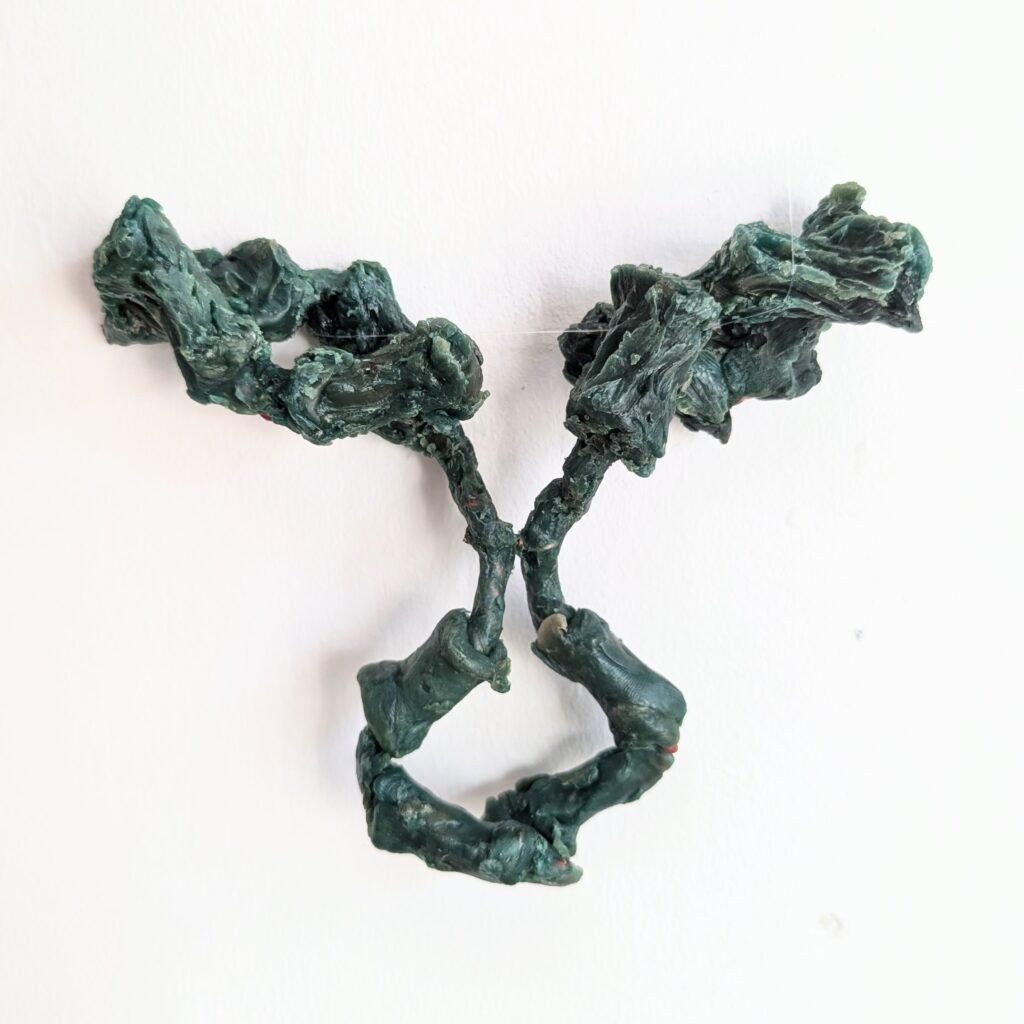
An early version of the wax antibody: at this stage I had made the immunoglobulin domains like little spiky barrels that made the whole antibody look a bit like a holly leaf (especially in the green wax)
During this process I used 3D models to really understand the structure of the antibody.
The immunoglobulin domain
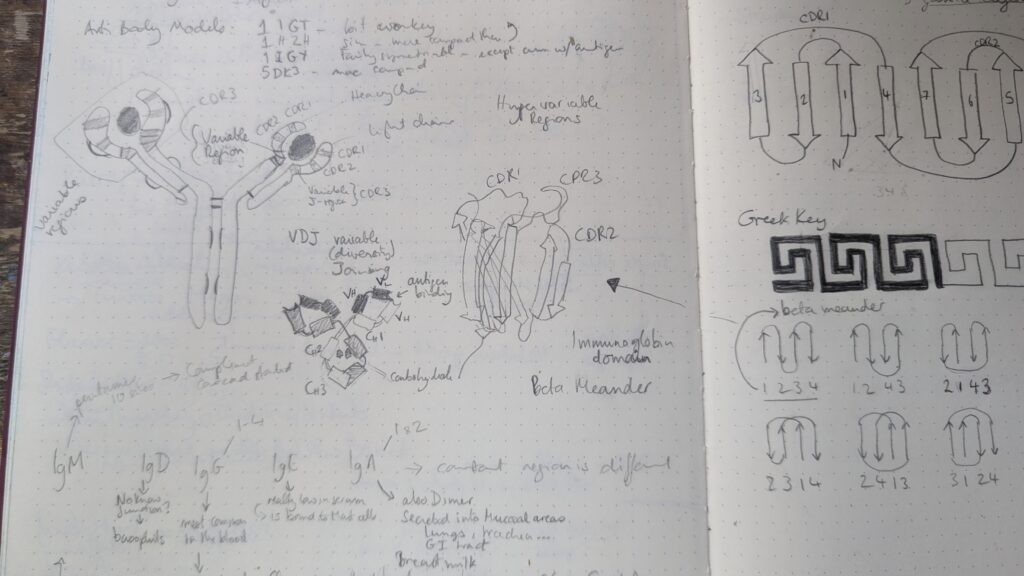
I got quite interested in the structure of the immunoglobulin (Ig) domains. Four Ig domains make up each long chain, and two make up each short chain. That makes 12 Ig domains in total in each antibody.
Each Ig domain is made of beta sheets: this is the way the antibody chain is arranged. All proteins are a long string of amino acids. But the string has certain ways it folds up to give the protein a structure. The basic building blocks of this are alpha helices (which is a spiral) or beta sheets (a pleated strand). The antibody is mostly beta sheets.
Protein diagrams represent each beta sheet as a flat arrow – that is what is being represented in the sketchbook drawings and my wax experiments.
I discovered that the beta sheets in the Ig domain are arranged like a Greek key. You can see what I mean on the right of this sketchbook.
For example, this was a small copper maquette of an Ig domain. The flat copper tape bits are the beta sheets. The wires that join them together form the ends of the Ig domain. In fact, it is these bits at the tips of the antibodies that are the variable regions, which change in each antibody. So it is only this bit of the antibody that changes. That change makes it a perfect fit for whatever “nasty intruder”, aka antigen, that particular antibody protects us against.
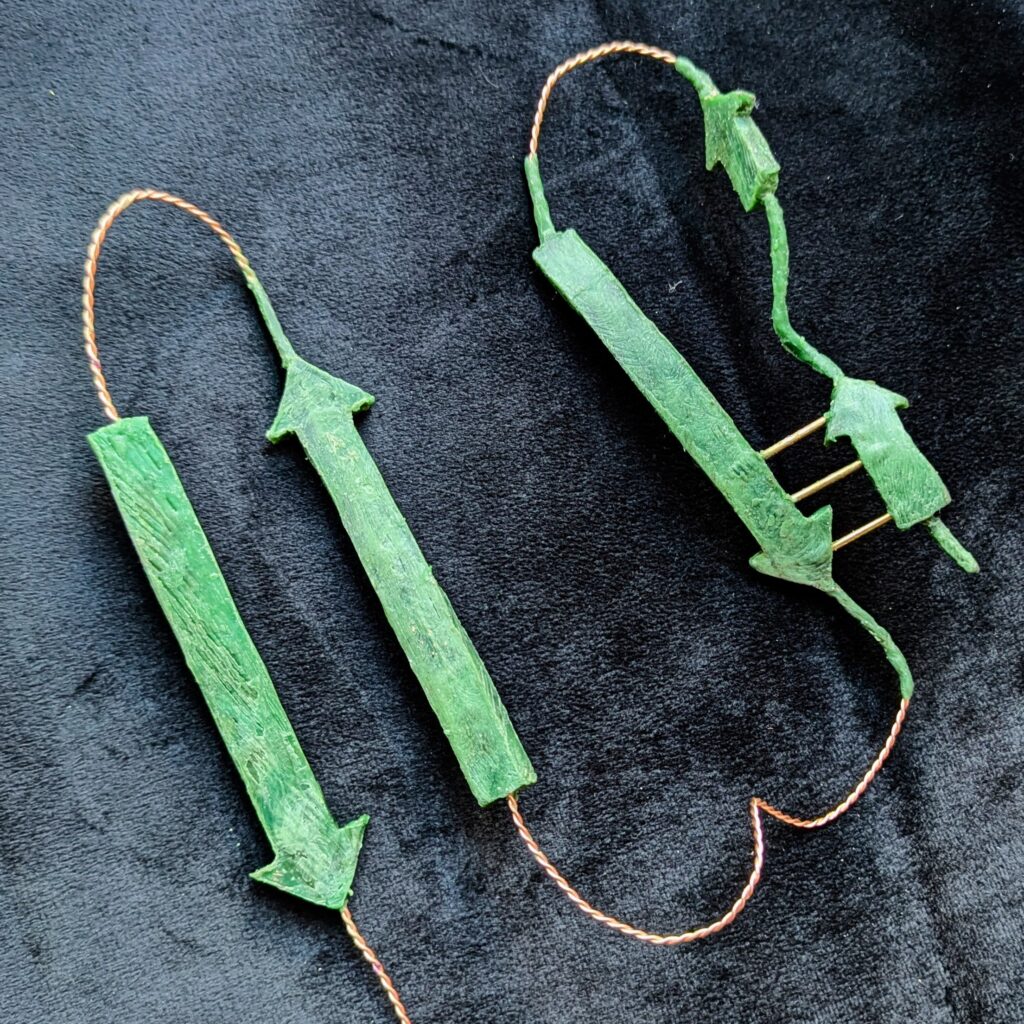
As my son would say, this was a side quest. This developed into a totally different idea for a sculpture, which I hope to make sometime.
Finishing the antibody sculpture in wax
After my Ig domain side quest, I came back to my wax sculpture of the whole antibody.
I decided to rework it so that each chain was a single continuous thread. That echoes how all proteins are strings of amino acids that fold into their final shape. So each chain became a looping thread that formed each domain as a complex knot. This is the double Greek key I had found in my research.
Later I found a very similar double Greek key in parts of the virus, a reminder that we are all made of the same underlying structures. This is strangely reminiscent of what the Greek key meant to the ancient Greeks: it was a symbol of eternity and unbroken continuity.
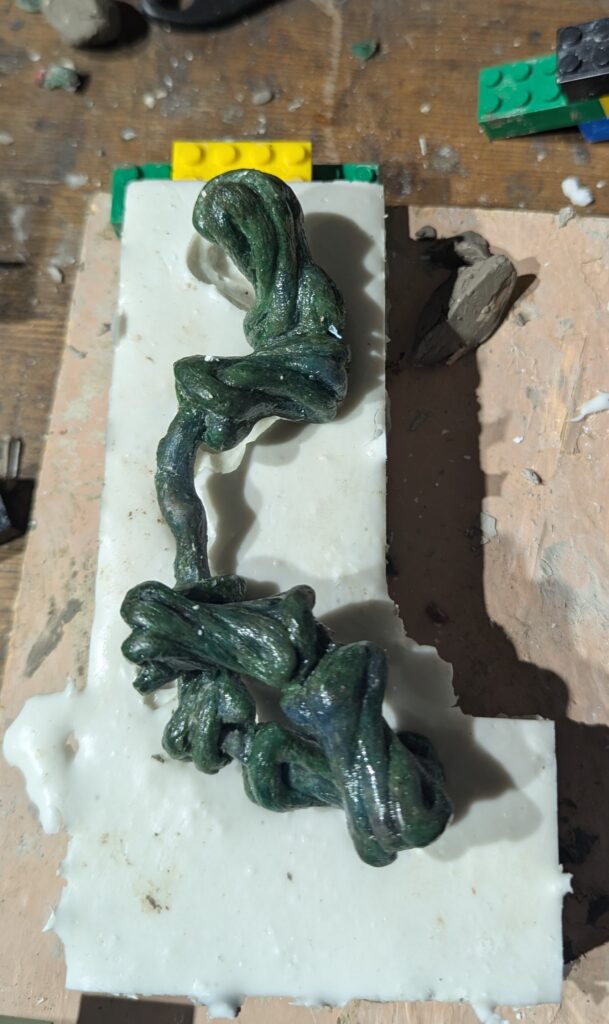
Half the antibody
Here you can see me making the mould to cast half of the antibody. I am building a clay wall so that I can create a two-part mould. I then used this mould to make an identical copy to complete the antibody.
Although at first glance the antibody might seem symmetrical, it isn’t really. It actually has an axis of rotational symmetry, not a mirror. If you were making this on a computer 3D programme, you would make one half first. Then copy it and rotate it through 180 degrees. And finish by putting the two halves together so they touch in the middle and at the bottom, creating the Y shape of the antibody.
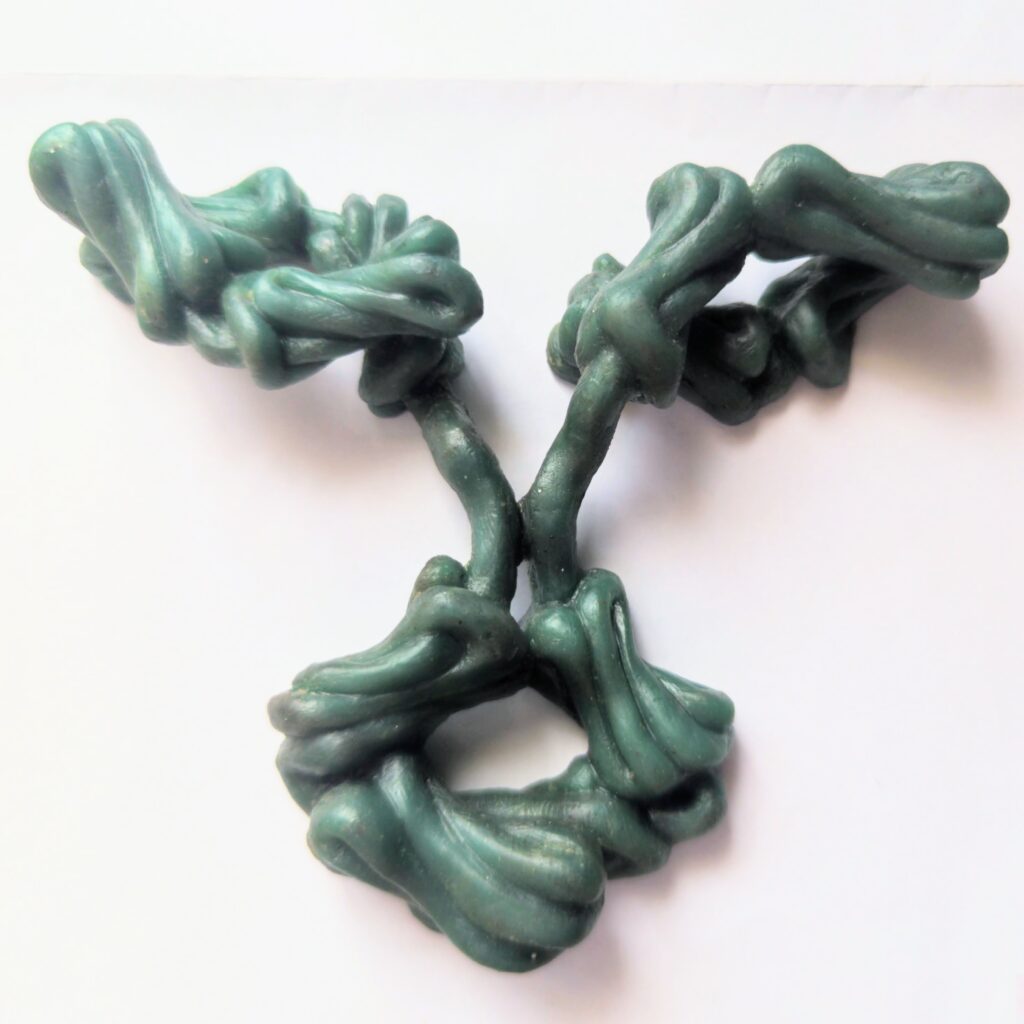
Here is the finished antibody in wax.
Casting the antibody in pewter
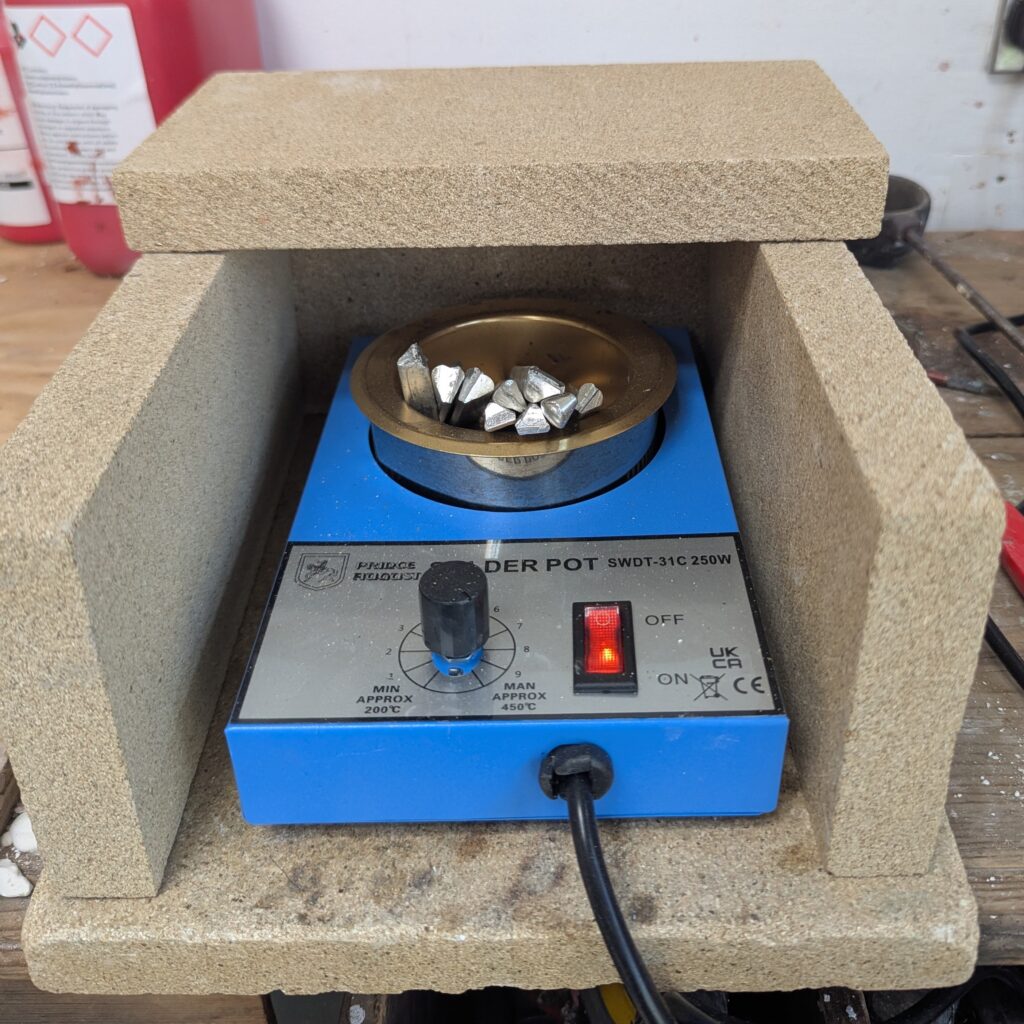
I love casting things in pewter in my studio. For this project I invested in a small solder heater to melt the pewter, which is an alloy of tin with a bit of copper and antimony. Before, I used to melt it in a ladle using a plumber’s torch.
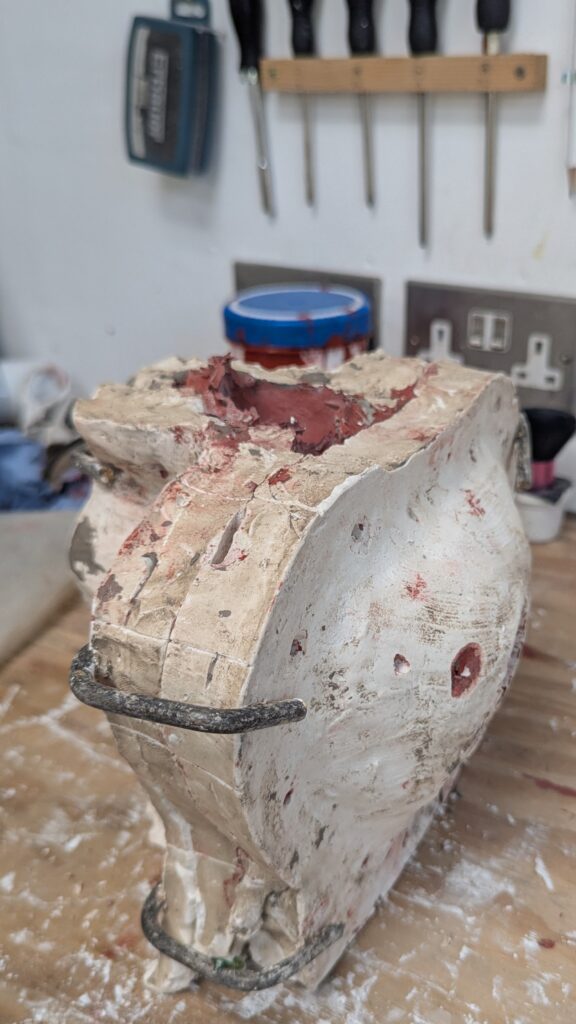
This is one of the moulds I use for casting the antibodies. We had to use two moulds, as there is a limit to how many casts you can get out of a single mould before it starts degrading. I made them from a red rubber that can withstand the heat of the pewter. I use the ‘mother first’ technique to make the plaster jacket first before pouring the red rubber into place.
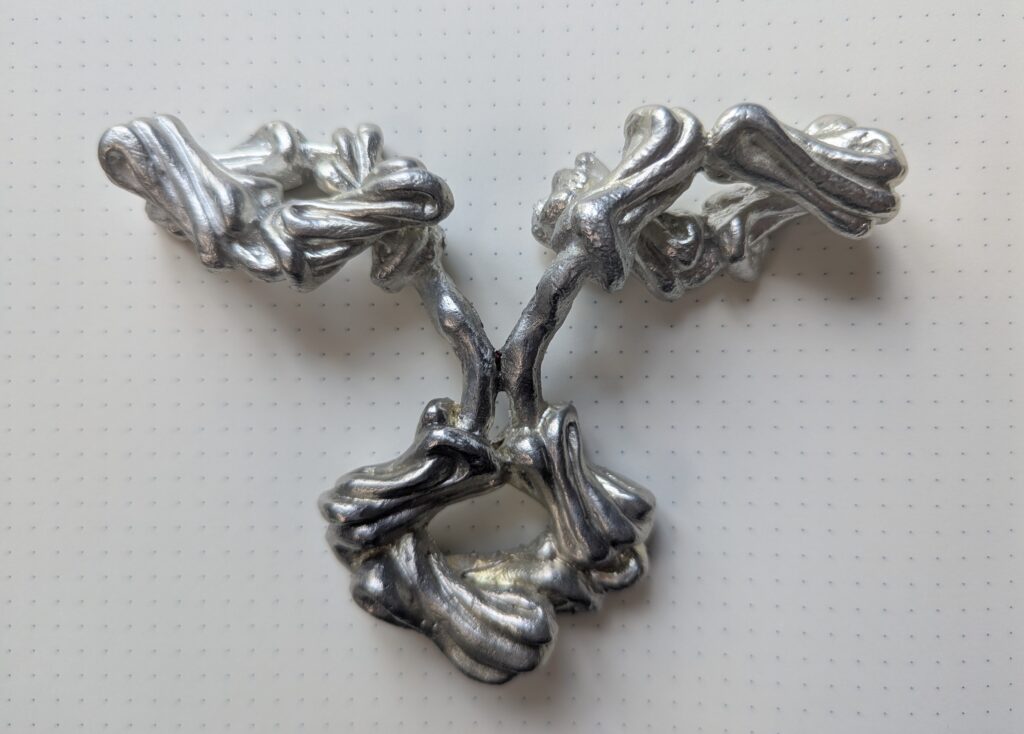
Here is the final antibody in pewter
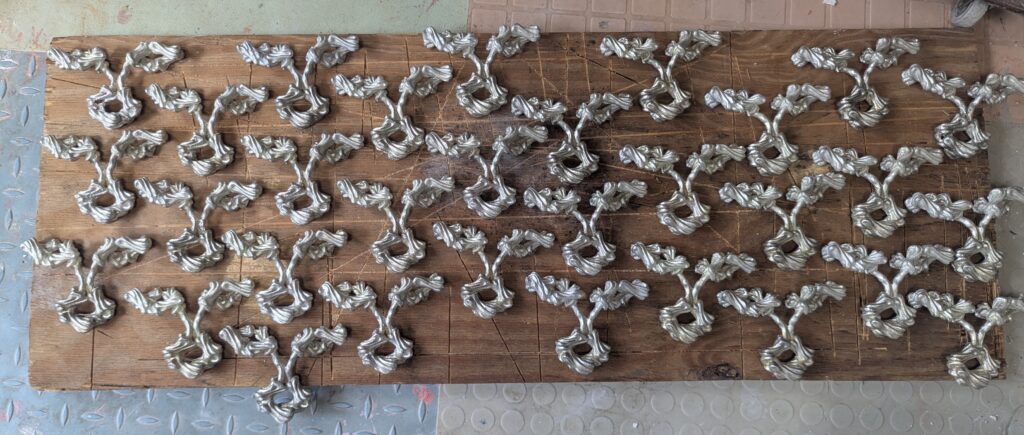
I had the help of a wonderful studio assistant, Jacqueline, who is a talented sculptor and ex-student of mine. We had to cast 70 antibodies, which was quite a feat.
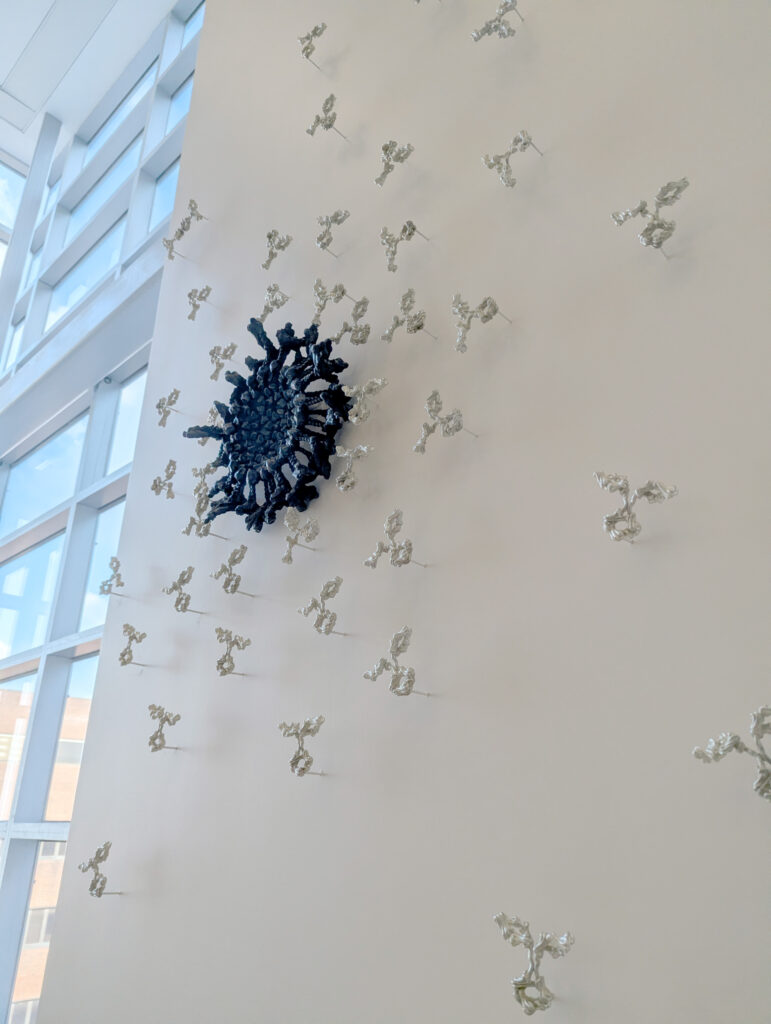
And here is a shot of the final installation of the virus and antibody sculpture. Next time I will need to tell you more about the virus!
Find out more
Explore Silent Sentinels, the full antibody and virus sculpture on the project page or read the Vanderbilt Health News feature on Silent Sentinels