
Who are the Silent Sentinels?
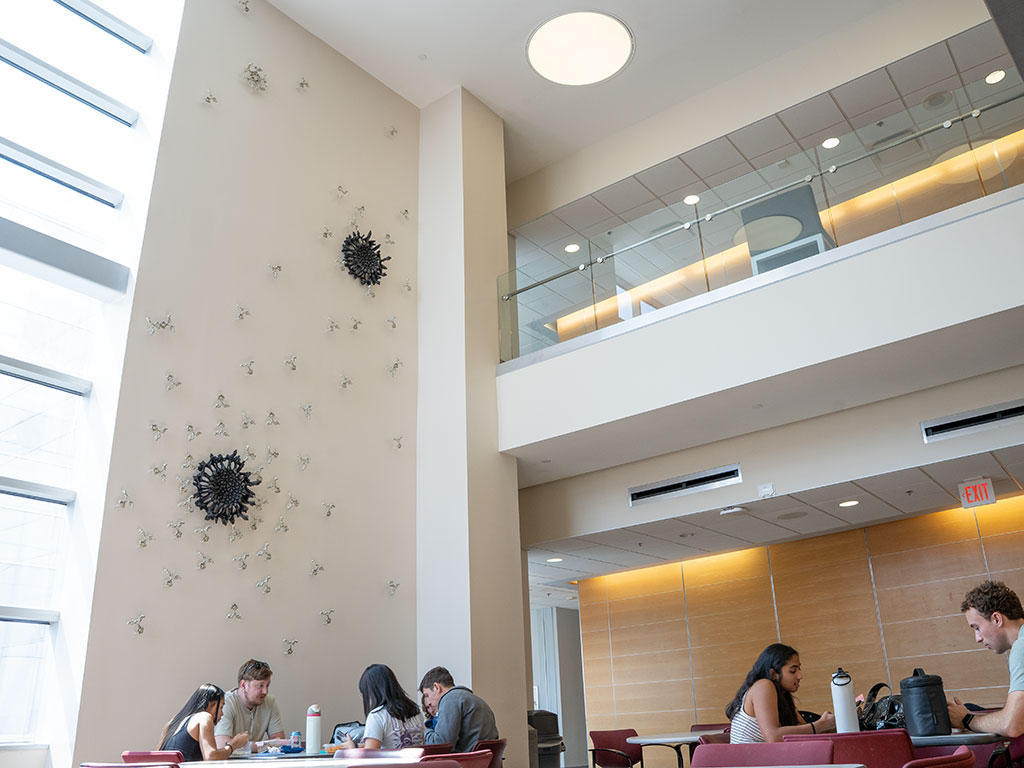
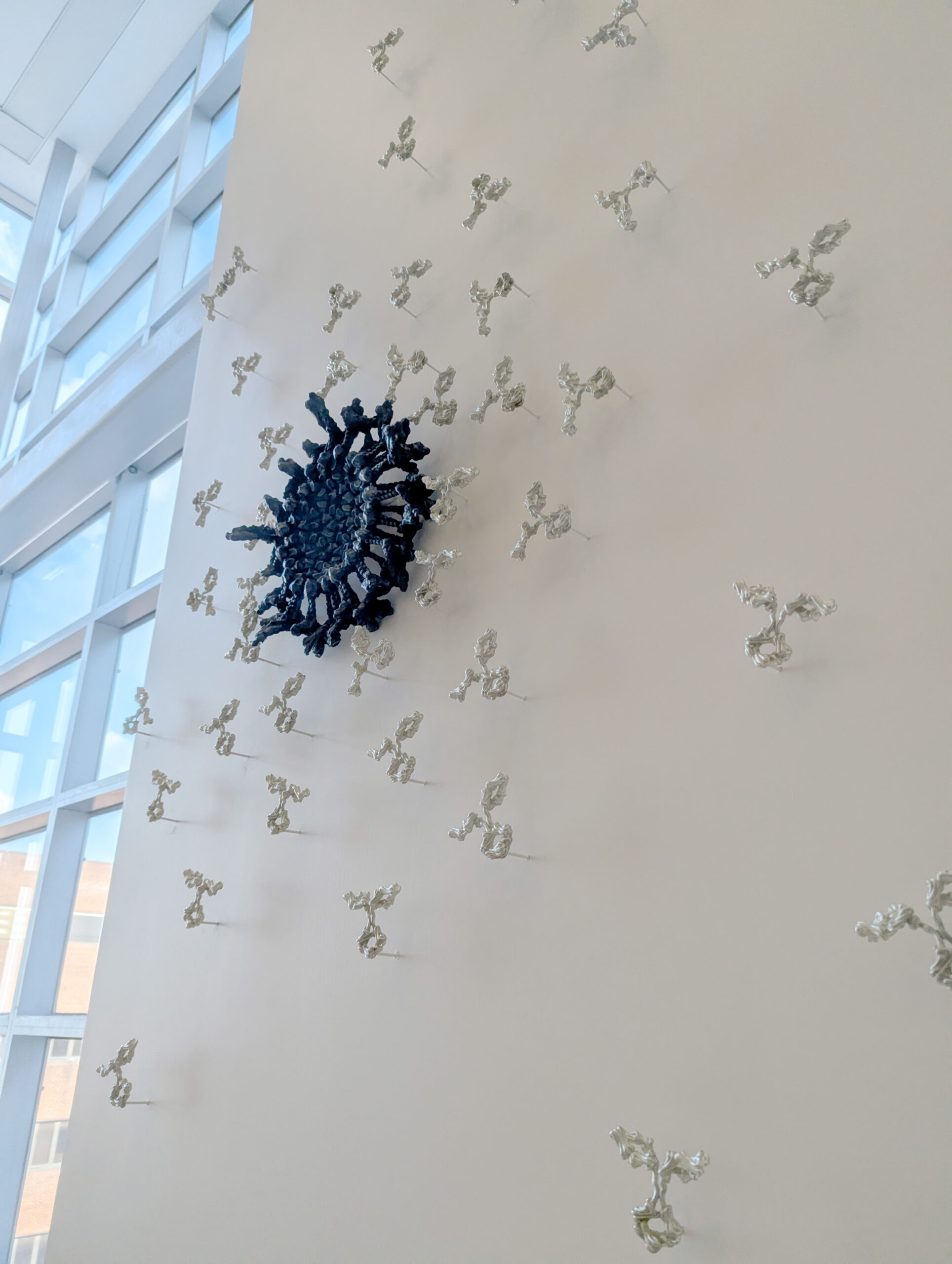
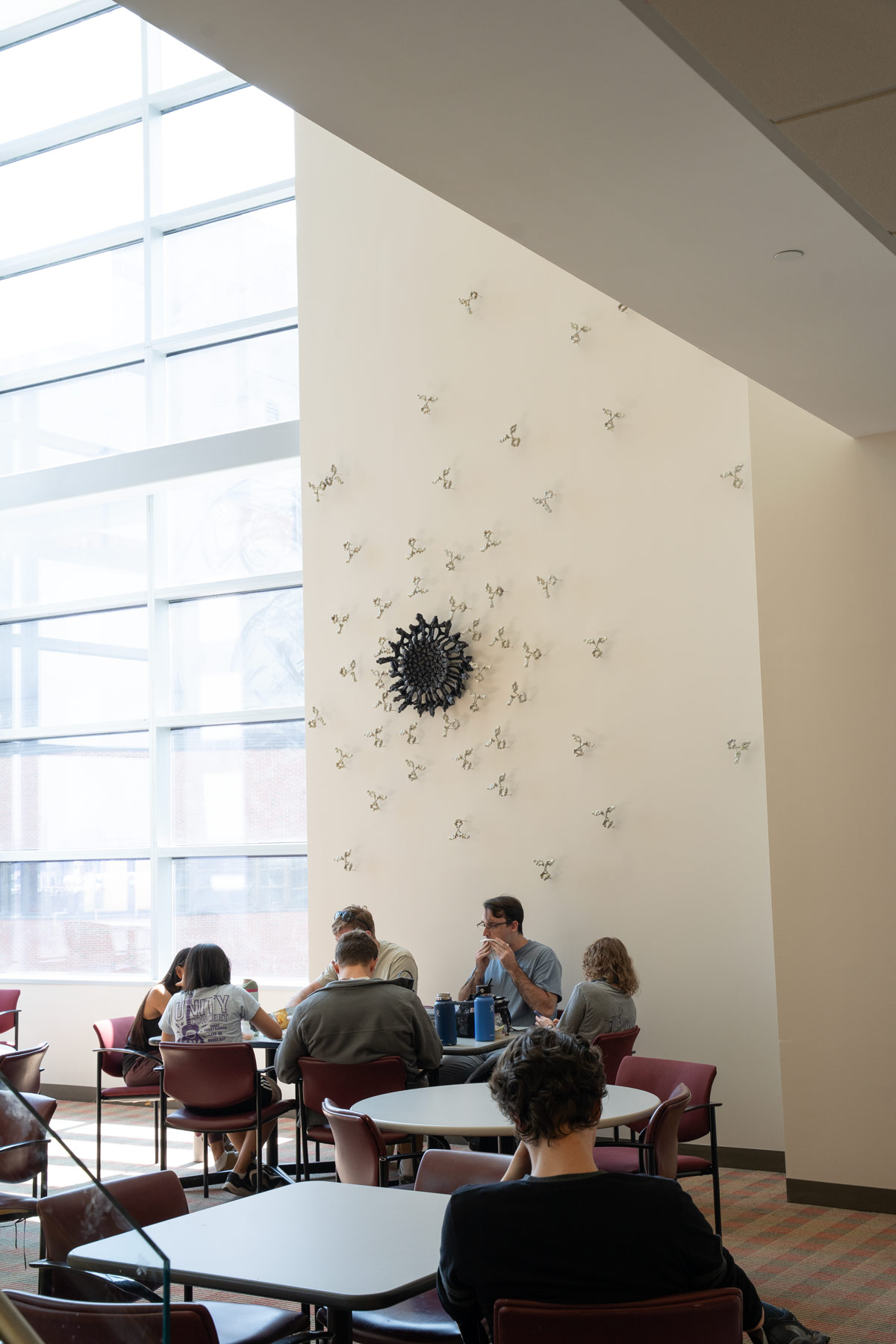
This Antibody Sculpture depicts a classic battle of good versus evil: tiny Y-shaped antibodies swarm dark, ominous looking viruses. Look closer, and each biological entity is built from its own repeating parts, the antibody from chains of protein folded into compact domains, the virus from its capsid and spike proteins. Small units work together to build complexity, much like scientists working collaboratively to solve biomedical problems. Look closer still, and the virus’s spike protein hides structures strikingly like the antibody’s folds. Even enemies belong to the same hidden architecture of life.
About the Artist
Briony Marshall has straddled art and science since childhood. She studied biochemistry at Oxford, drawn in by how fast science was unlocking the chemistry of life, before training in classical sculpture, learning to truly see and translate that seeing into form. Years into that practice, working with the VCAT team as part of the Visualising Virology Residency, she found a Greek Key pattern echoed in the antibody’s own structure — the same ancient motif the Greeks carved into pottery and mosaics as a symbol of eternity and unbroken continuity. This revelation was a small, strange moment: she wasn’t sure if it was coincidence or some underlying pattern still not understood. She brings a sculptor’s eye to what scientists spend careers decoding and finds her own quiet way of making sense of it.
The Science behind the Antibody Sculpture
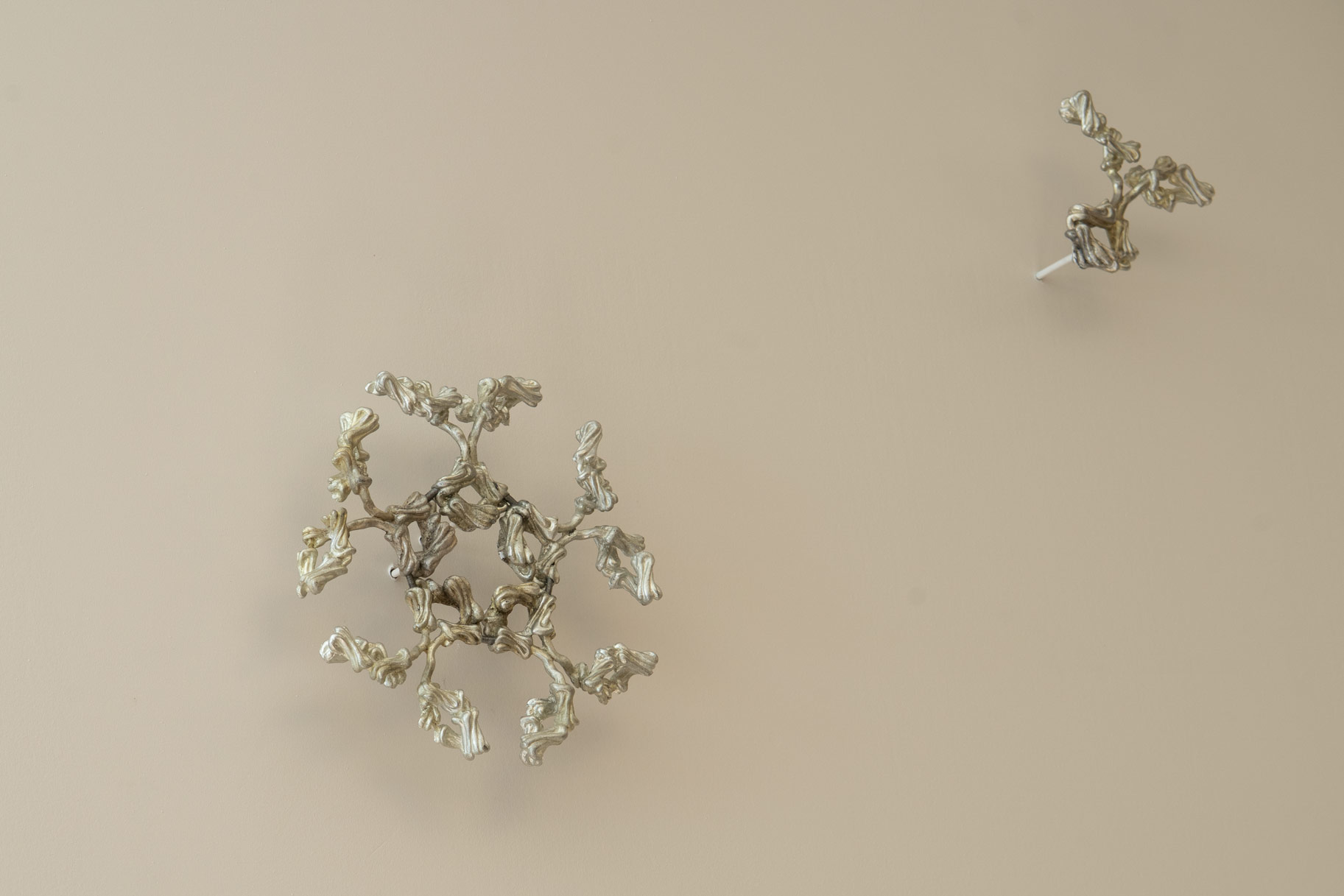
Marshall sculpted the antibody first. Its four chains, two light chains, two heavy chains, fold into repeating immunoglobulin domains, structures made of beta sheets folded in a double Greek Key motif. In the sculpture, each chain is a single unbroken thread, looping into one knot-like structure, then travelling on to fold into the next, echoing that same sense of unbroken continuity the ancient pattern once symbolised. The VCAT laboratory works to turn antibodies like these into treatments, with a particular focus on protecting the most vulnerable individuals, including infants and the elderly.
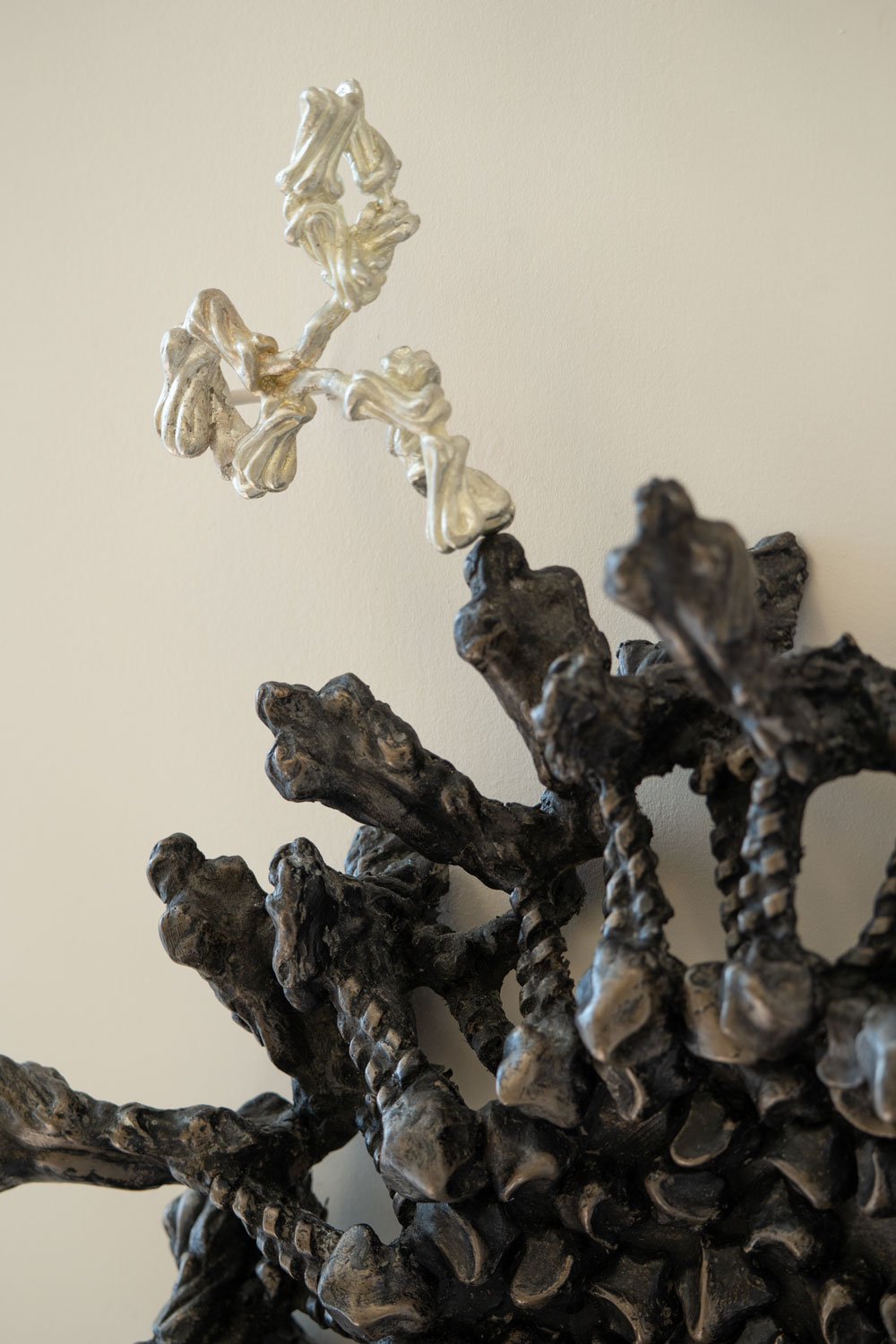
The virus represented here is VEEV, Venezuelan equine encephalitis virus, built from the laboratory’s own 3D structures, held in the Protein Data Bank. In the bowl of the virus, round capsid proteins gather in flower-like clusters of five and six, tessellating into the same pattern of pentagons and hexagons found on a soccer ball. Each capsid protein connects to a spike protein, which protrude out of the surface of the virus and are used as keys to invade host cells. The antibodies block this action by attaching to the tip of the spike and at the same time render the virus visible to other parts of our immune system. The spike protein contains folded beta sheet knots, strikingly similar to the antibody’s own immunoglobulin domains. This double Greek Key knot-like structure is present across all life forms, reminding us that we are all made of the same fundamental materials of life. 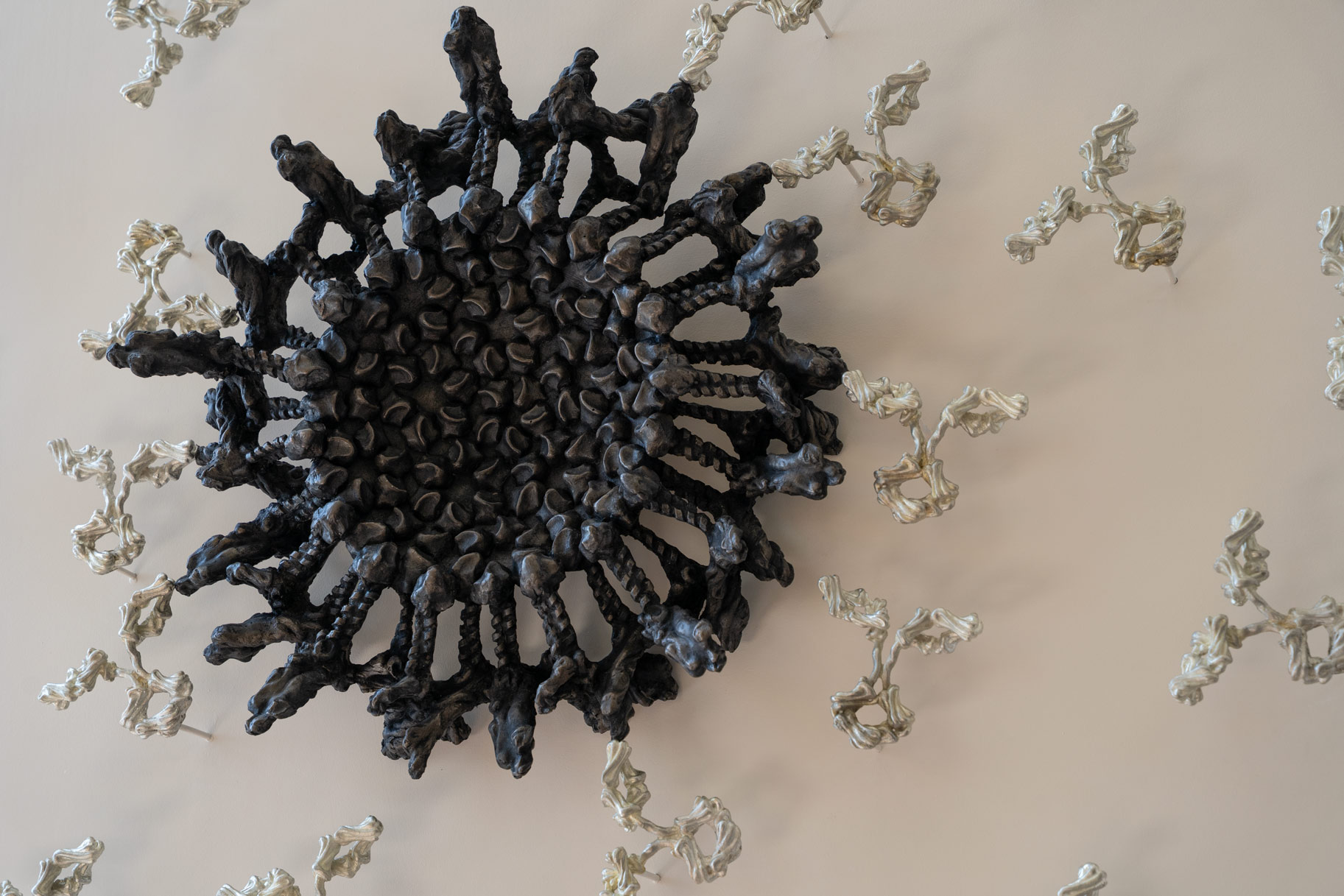
The Art History behind the Antibody Sculpture
There is a long tradition of repeated patterns evoking the sacred, or life’s underlying patterns. These motifs range from traditional tile patterns to Escher’s interlocking patterns of angels and demons. For Marshall, the work illustrated a more complex game still, since tessellating the subunits in three dimensions was a fun, if tricky, problem to solve. The artwork is also reminiscent of history paintings depicting battles of the shiny good versus dark evil — tiny Davids against a Goliath in the shape of the VEEV virus. Perhaps this is the essence of Silent Sentinels: guardians within that hidden architecture, keeping watch where we cannot see.


Related Media Coverage
Silent Sentinels sculpture celebrates the invisible power of Vanderbilt Health’s antibody research
30th September 2026
Visualizing Virology: Briony Marshall to work with scientists at world renown Vanderbilt Vaccine Centre
5th July 2024